
Key takeaways
- General AI gives generic career advice. Employees already ask AI assistants for career advice, and the answers are fluent but could apply to anyone.
- Rumi knows the person. Rumi by Chronus knows each person’s goals, what drives them and who around them has been there, so they never start from zero.
- The best answer is often a person. Today, Rumi Mentor matches people with a mentor who has been there and shows them why.
- Rumi shows up where people already work. The Chronus platform, Teams and Slack.
- HR sees adoption and outcomes in aggregate. Customer data is never used to train or improve Chronus AI or any external, shared or public AI model.
Maya was promoted to manager on Monday. By Tuesday night she’s asking an AI assistant how to lead people who used to be her peers. She gets five tidy tips. They’re good tips, and they’d be good for anyone.
That’s the problem. The answer doesn’t know what Maya is working toward, how her company defines good leadership, or that someone two teams over made the same jump last year.
Many employees now have an AI assistant they can ask. The question for HR is whether it knows their people well enough to help, and whether it ever connects them to each other.
Why your employees’ AI gives generic career advice
Using AI at work is now common. As of May 2026, Gallup found that 52% of US employees use AI in their role at least a few times a year, and 15% use it daily. In a 2025 Gallup survey, 36% of employees who used AI at work said they used it to learn new things.
But general assistants know the internet, not your people. Every conversation starts from zero and ignores your frameworks. The answers are fluent, but they could apply to anyone.
Each answer also ends in a paragraph. The next step is up to the employee, and HR can’t see whether any of it helped.
What changes when AI knows the person
Rumi by Chronus knows your people: their goals, what drives them and who around them has been there. A model is only as good as what it knows about the person, so Rumi draws on six things:
- Who they are. Role, team and tenure, from HR systems.
- What they bring. Skills and experience.
- What they want. Goals in their own words.
- What drives them. Their purpose.
- Who they’ve learned from. Their mentoring history.
- What the organization needs. Program goals and rules.
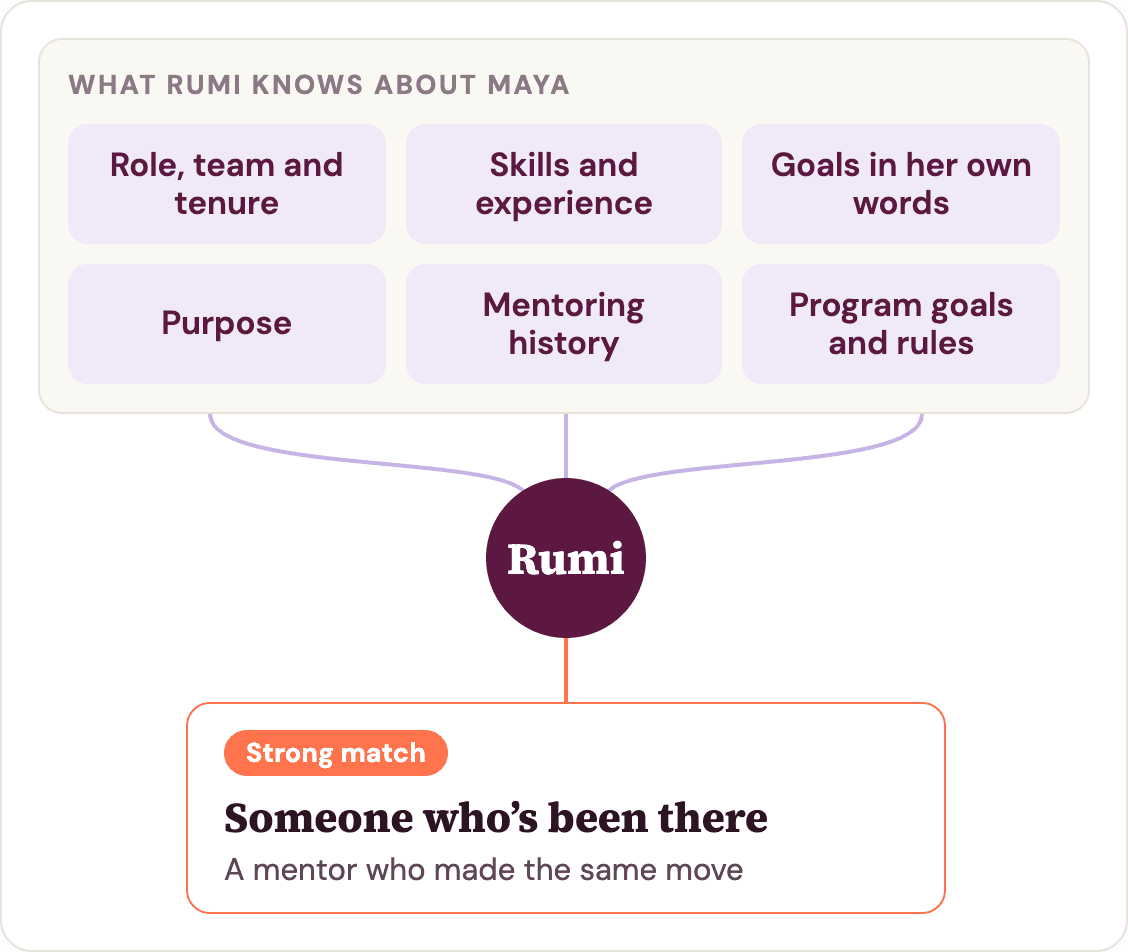
No one has to re-brief it, and no one starts from zero. Rumi builds on your company’s real mentoring history, so its guidance fits the person.
| General AI assistant | Rumi | |
|---|---|---|
| Knows | The internet | The person and your organization |
| Starts | From zero | From their goals, purpose and history |
| Ends | In a paragraph | With someone who has been there |
The best answer to many career questions is someone who’s been there
General AI ends in a paragraph. Rumi ends with a person, inside the programs you already run.
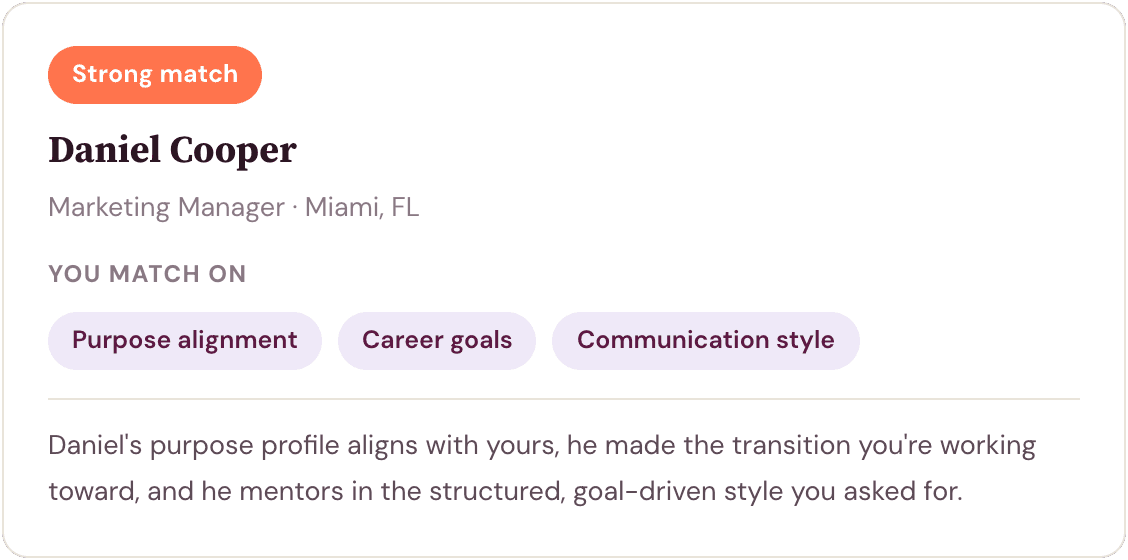
Today, Rumi Mentor matches Maya with a mentor who made the same move and shows her why. In-conversation introductions arrive in Q1 2027.
Rumi shows up where people already work
Your people don’t need another place to go. Rumi shows up where they already work: the Chronus platform, Teams and Slack. The mentoring program runs in both Slack and Teams, where participants can act on requests, respond to surveys and confirm meetings without logging in.
It also works alongside the systems you already run.
What HR sees, and what stays private
HR sees adoption and program outcomes in aggregate in Analytics in Admin Hub. Employees can see why they were matched.
Customer data is never used to train or improve Chronus AI or any external, shared or public AI model.
Frequently asked questions
Does Rumi replace our HRIS or learning platform?
No. It works alongside the systems you already run.
Can employees see why they were matched?
Yes. Each match shows what it’s based on, such as purpose, career goals and communication style.
What’s available in Rumi now?
Matching on profiles, HR data and purpose is live today. Conversational coaching and mentor routing arrive in Q1 2027.